Mount Teide Cable Car: Tickets, Prices, and Visitor Guide
You smell the sulfur before you even step off the metal platform. Up at 3,555 meters, the air feels noticeably thin, cool, and sharp against your lungs, a complete shock if you were sitting on a sunny beach in Los Cristianos barely two hours ago. Riding the teide cable car is the quickest way to trade Tenerife's coastline for a lunar desert of ochre scree and twisted black basalt, vaulting you past thousand-year-old lava flows in an eight-minute glide.
Getting up there takes a bit of strategy. Tickets sell out weeks ahead, wind shutdowns happen without warning, and the parking lot at the base is notoriously small. This guide breaks down what you will actually pay, how the booking system works, which trails you can walk from the top station, and how to survive the thin mountain atmosphere without ruining your afternoon.
Book your teide national park experience:
How the Teide Cable Car Works: Base to La Rambleta
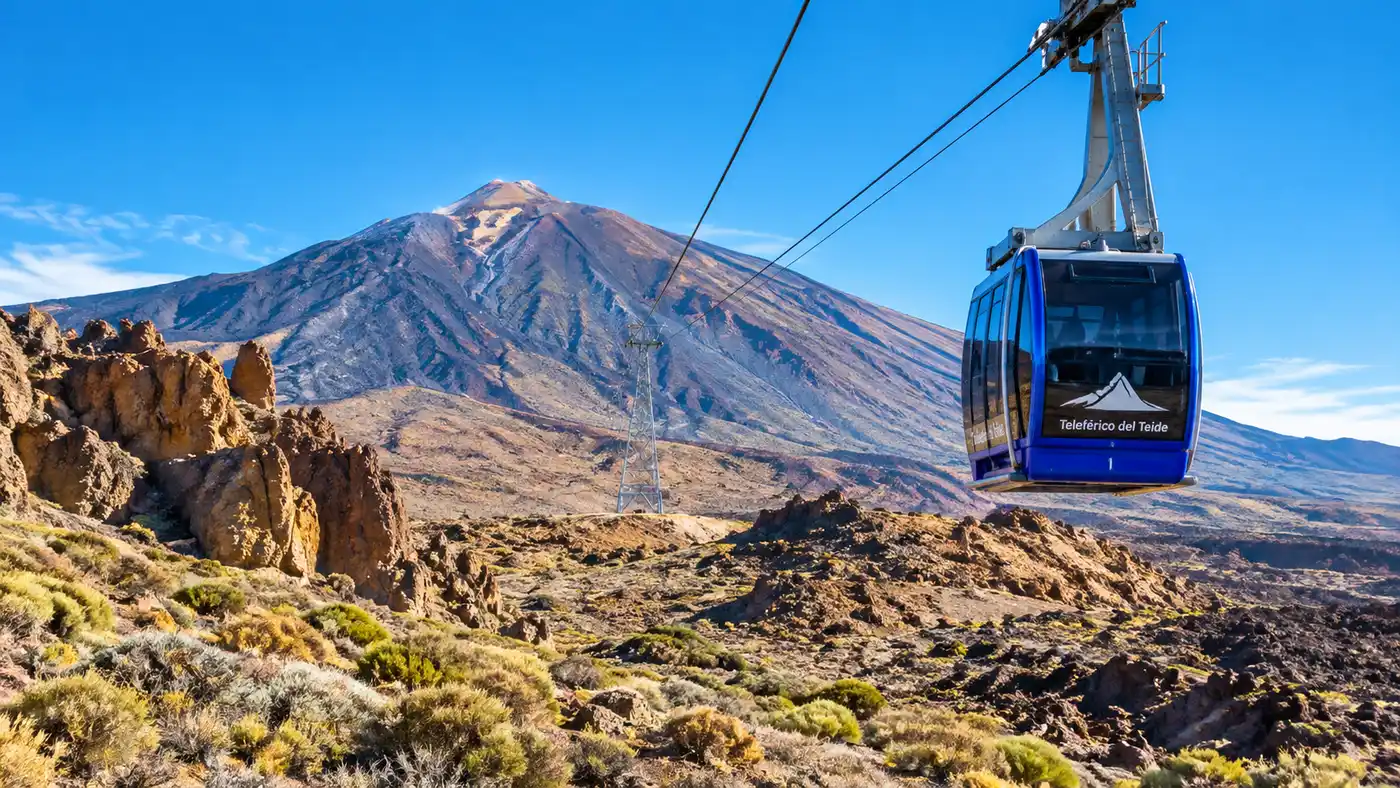
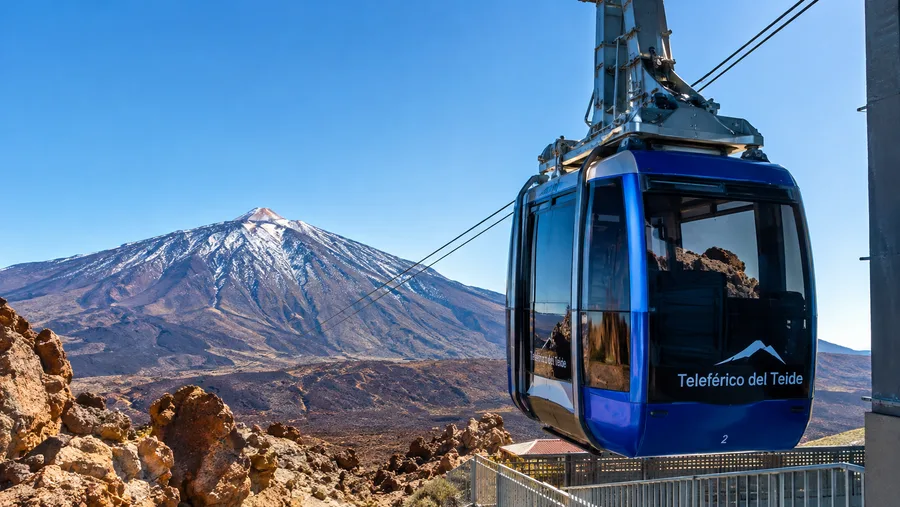
The system is remarkably straightforward. Known locally as the Teleférico del Teide, it operates two cabins on a continuous loop. While one cabin descends, the other rises. The ride covers an elevation gain of 1,199 meters without an intermediate station, starting at the base terminal at 2,356 meters and terminating at the La Rambleta station at 3,555 meters.
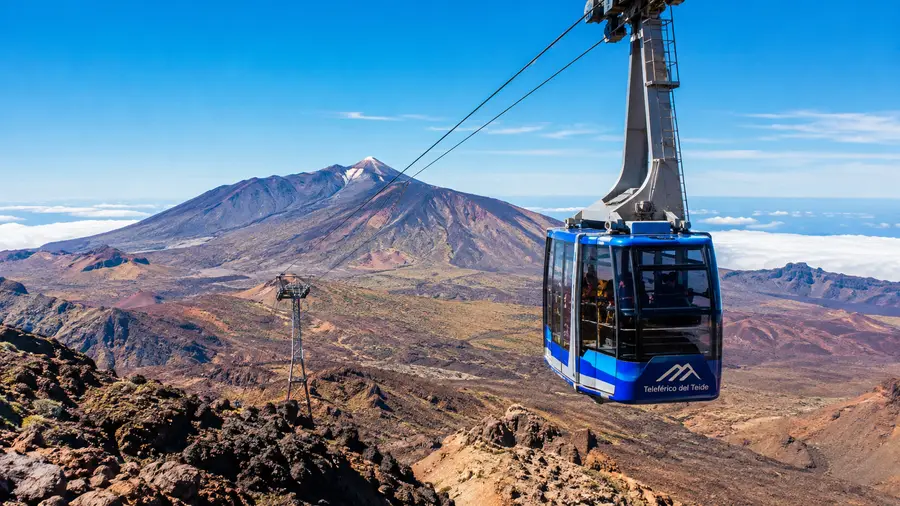
It takes about eight minutes. You step into the cabin with about 40 other people, standing shoulder to shoulder. If you want the dramatic views, fight gently for a spot near the windows facing downhill. As the cabin pulls out from the lower terminal, it swings out over the caldera floor. You see the Ucanca plain spread out like a red frying pan below you. Then comes the second pylon. The cabin makes a stomach-dropping lurch as it rolls across the steel cables at the tower, drawing a collective gasp from everyone inside every single time. It is completely safe, but your inner ear will definitely register the drop.
The machinery dates back to an initial build completed in 1971, though it underwent massive modernization in 1999 and regular overhauls since. The engineering on this cliffside is genuinely impressive. Looking up from below, the cables look impossibly thin against the sheer grey volcanic cone.
Pro tip: Board near the back-left corner of the cabin on the way up. That angle gives you the cleanest view back over the Llano de Ucanca crater and the southern rim without other passengers' heads blocking your camera lens.
Mount Teide Cable Car Tickets, Pricing, and Booking Options
Do not show up at the base station expecting to buy a ticket at the window. The ticket booths on site almost exclusively handle digital barcode scans and cancellations. If you arrive without a reservation between March and October, you will almost certainly be turned away.
Basic ticket pricing is tiered based on age, residency status, and whether you bundle audio guides or guided tours. For a standard adult non-resident, a return ticket runs roughly €41. A one-way ticket is about €23, which is what hikers buy when they hike up the Montaña Blanca path on foot and want to save their knees on the descent. Children aged 3 to 13 pay half price. Babies and toddlers under 3 are strictly banned from riding due to the rapid atmospheric pressure shift.
| Ticket Type | Standard Adult | Child (3-13) | Key Inclusions |
|---|---|---|---|
| Standard Return | €41.00 | €20.50 | Round-trip ride, 1 hour top station stay |
| One-Way Ascent or Descent | €23.00 | €11.50 | Single ride for hikers tackling Trail 7 |
| Cable Car + Audio Guide | €46.00 | €23.00 | Return ticket plus downloadable mobile commentary |
| Sunset Ticket (Twilight) | €68.00 | €34.00 | After-hours ascent outside standard operating times |
When you book online, you must select an exact 10-minute time slot. You are expected to arrive at the boarding turnstile about 15 minutes before that printed time. If you miss your window because you were stuck behind a tourist bus crawling up the mountain at 20 kilometers per hour, staff will sometimes squeeze you into a later standby line, but they are under no obligation to do so on crowded days.
There is also a strict time limit at the top. Your ticket gives you up to one hour at the upper station. This rule exists to stop the narrow gravel trails around the summit from choking on thousands of lingering visitors. In practice, nobody checks your watch the second you exit the cabin, but your return boarding pass corresponds to a departure window about an hour later.
Getting to the Base Station: Parking and Transit
The lower terminal sits right alongside the TF-21 road, the long volcanic highway crossing the national park from north to south. Getting there is half the journey, honestly. The drive winds through pine forests before bursting through the cloud layer into raw volcanic fields.
If you plan to drive, read through our detailed breakdown on driving and bus routes to Teide before setting your GPS. The parking situation at the lift is messy. The dedicated lot has room for roughly 220 vehicles. By 9:30 AM, it is full. Cars spill out onto the dirt shoulders of the TF-21 for half a kilometer in either direction, and local transit police do issue fines if your tires cross the white road-boundary lines.
- By rental car: Allow 90 minutes from Costa Adeje or Playa de las Américas via Vilaflor. Allow 75 minutes from Puerto de la Cruz along the TF-21.
- Public bus (Guagua): Titsa line 342 runs once per day from Costa Adeje in the morning and returns in the afternoon. Line 348 does the same run once daily from Puerto de la Cruz.
- Organized excursions: Dozens of commercial buses run daily from coastal resorts, bundling the cable car ticket with hotel pickup, which sidesteps the parking problem entirely.
If you take the public bus, be painfully mindful of the schedule. If you miss that afternoon return bus, you are looking at a €90 taxi fare down to the coast, assuming you can even convince a cab dispatcher in La Orotava to send a car up the volcano.
Book your teide national park experience:
Trails from the Upper Station: La Rambleta
Stepping out of the upper station into the cold wind, you find yourself on a rocky balcony called La Rambleta. You are not at the actual peak yet. The true summit of Mount Teide looms another 163 meters above your head, a pale yellow mound leaking small curls of white steam.
From the station exit, you have three distinct trail options:
- Trail 10 (Telesforo Bravo): This path climbs directly to the crater rim at 3,718 meters. You cannot simply walk onto this trail. It is guarded by a locked gate and park rangers checking passports. To set foot here, you must secure a free summit permit months before your holiday, as daily access is capped strictly at 200 people.
- Trail 11 (Mirador de La Fortaleza): A well-maintained path heading northeast. It takes about 25 minutes of easy walking along an uneven rock path. It looks out toward the green spine of the Anaga mountains and northern Tenerife, often sitting right above an ocean of fluffy trade-wind clouds.
- Trail 12 (Mirador de Pico Viejo): My personal favorite route. It leads west along the crater flank for about 30 minutes. At the end, you stare straight down into the gaping, multi-colored caldera of Pico Viejo, an ancient crater 800 meters across that glows deep red and green. On clear days, La Gomera, La Palma, and El Hierro float on the Atlantic horizon.
Note: Even without a summit permit, walking Trail 11 or Trail 12 gives you phenomenal panoramic views. Do not feel that skipping the very peak ruins the visit. Pico Viejo's crater is visually far more dramatic than Teide's main crater anyway.
The ground along these tracks consists of broken pumice and sharp volcanic stone. Leave the sandals in your hotel room. Stumbling on sharp slag at this altitude cuts your skin easily, and you do not want to twist an ankle 3,500 meters up a mountain.
Weather Closures, Refunds, and Mountain Safety
High altitude weather is erratic. It can be 28 degrees Celsius down on the sand in Playa Fañabé while gale-force winds tear across the upper cables at 60 kilometers per hour. When wind speeds at the top station exceed safety thresholds, the lift closes immediately.
This happens frequently. Winter storms bring heavy snow and ice that freeze the cables solid, while spring and autumn often bring high-altitude wind shears. Before you load the car and drive up the winding mountain roads, verify operating conditions on the official website or check the park's live cameras. We track these seasonal changes closely in our guide to Teide weather, webcams, and forecasts.
If the company cancels operations due to bad weather, your booking is not lost. You automatically receive an email offering two choices. You can either reschedule your time slot to another day, or request an immediate full refund back to your payment card. If you are near the end of your trip, take the refund. Available slots on subsequent days fill up fast when a backlog of delayed tourists suddenly tries to rebook.
- Warm outer layers: Temperatures at the top station hover between 2 and 9 degrees Celsius even during midsummer, dropping well below freezing between November and April. Bring a windbreaker.
- UV protection: Solar radiation increases rapidly with elevation. Wear polarized sunglasses and put on SPF 50 sunscreen even if the sky looks overcast.
- Hydration: The humidity in the caldera frequently drops below 10 percent. Pack at least a liter of water per person to ward off sudden altitude headaches.
- Footwear: Wear stiff, closed-toe walking shoes. Sharp volcanic rock shreds soft sneaker foam and cuts bare ankles.
Take your time walking. The thin air hits people differently. You might step out of the station feeling completely normal, only to find yourself panting and dizzy after climbing a small flight of ten stone steps. Pace yourself like a pensioner, drink water constantly, and sit down on the stone benches if your temples start throbbing.
Frequently Asked Questions about teide cable car
Can pregnant women or babies ride the teide cable car?
No. Park safety regulations strictly prohibit pregnant women and children under the age of 3 from boarding. The rapid altitude gain of 1,200 meters in eight minutes causes sharp atmospheric pressure drops that pose serious risks to fetal development and infant ears.
What happens if the cable car closes while I am at the top?
If sudden wind forces an emergency closure while you are at the upper station, the operators run the cabins at slow crawl speeds to evacuate everyone safely. In the extremely rare event of a total mechanical fault, rangers guide visitors down the mountain on foot via Trail 7.
Can I hike up Mount Teide and take the cable car down?
Yes. Many hikers tackle Trail 7 from Montaña Blanca, taking about 4 to 5 hours to climb the 1,350 vertical meters to the lift station, then buy a one-way descent ticket. Make sure you confirm the lift is running that day before setting off on foot.
Are there restrooms and cafes at the top station?
There are basic public restrooms at the La Rambleta top station, along with free Wi-Fi, but no restaurant or cafeteria. There are only automated vending machines selling water and light snacks. The main cafe and souvenir shop are at the base station.
How far in advance should I book tickets?
Book at least two to three weeks ahead during peak summer, Easter, and Christmas seasons. For morning slots between 9:00 AM and 11:30 AM, tickets often sell out a month in advance. Mid-afternoon slots usually have slightly better availability on short notice.
Quick Reference
- Base station: 2,356m / Top station: 3,555m
- Ride duration: 8 minutes each way
- Standard adult return fare: €41.00
- Children under 3: strictly prohibited
- Time limit at upper station: 1 hour
Book your teide national park experience:
Is It Worth It?
Riding up into the sky over black lava slopes is one of those classic travel moments you will remember long after your sunburn fades. Yes, €41 feels steep for an eight-minute lift ride, and juggling sold-out time slots requires more planning than most people want on a laid-back Canary Island holiday. But once you stand on that basalt ledge at 3,555 meters, watching the clouds crawl across the pine valleys below while sulfuric steam hisses out of the scree beside your boots, the price tag stops mattering. Just book your ticket well before you pack your suitcase, bring a warm fleece, and give your lungs plenty of time to adjust.
Read more about teide national park.